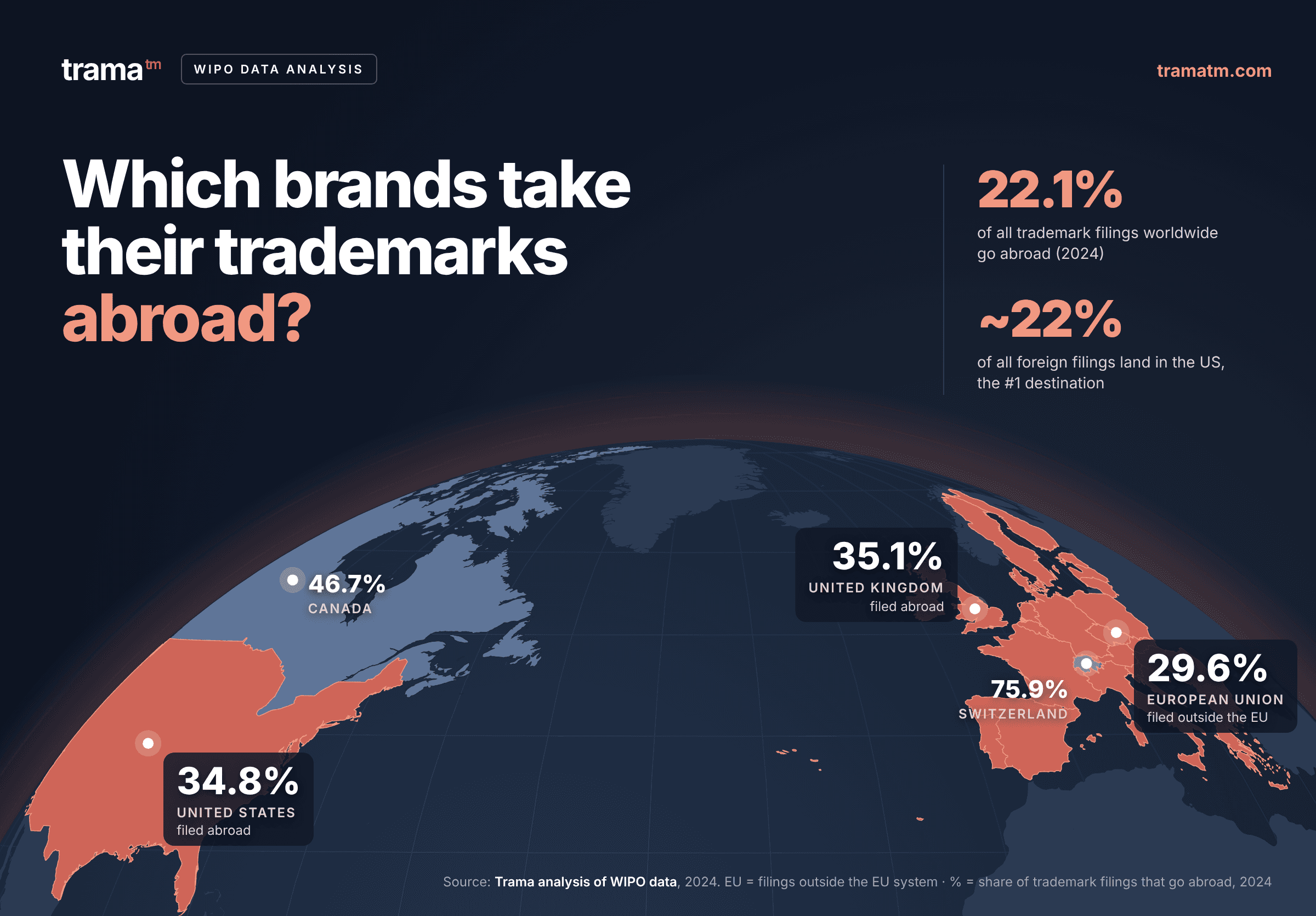
Domestic vs. Abroad: Which Trademark Applicants Are Most Likely to Go International
We analyzed a decade of WIPO filing data to see how much trademark activity goes abroad, how that's changed, and which nationalities file internationally most.

Insights, news and case studies that inspire fellow colleagues in the legal industry.

A cross-sectional survey with a representative sample of 10,000 consumers was used to assess the consumers' attitudes towards the extent to which a brand influences their purchase behaviour and their willingness to pay premium prices.
24
Perceived importance of brand
11
Willingness to pay premium for brand
We analyzed a decade of WIPO filing data to see how much trademark activity goes abroad, how that's changed, and which nationalities file internationally most.
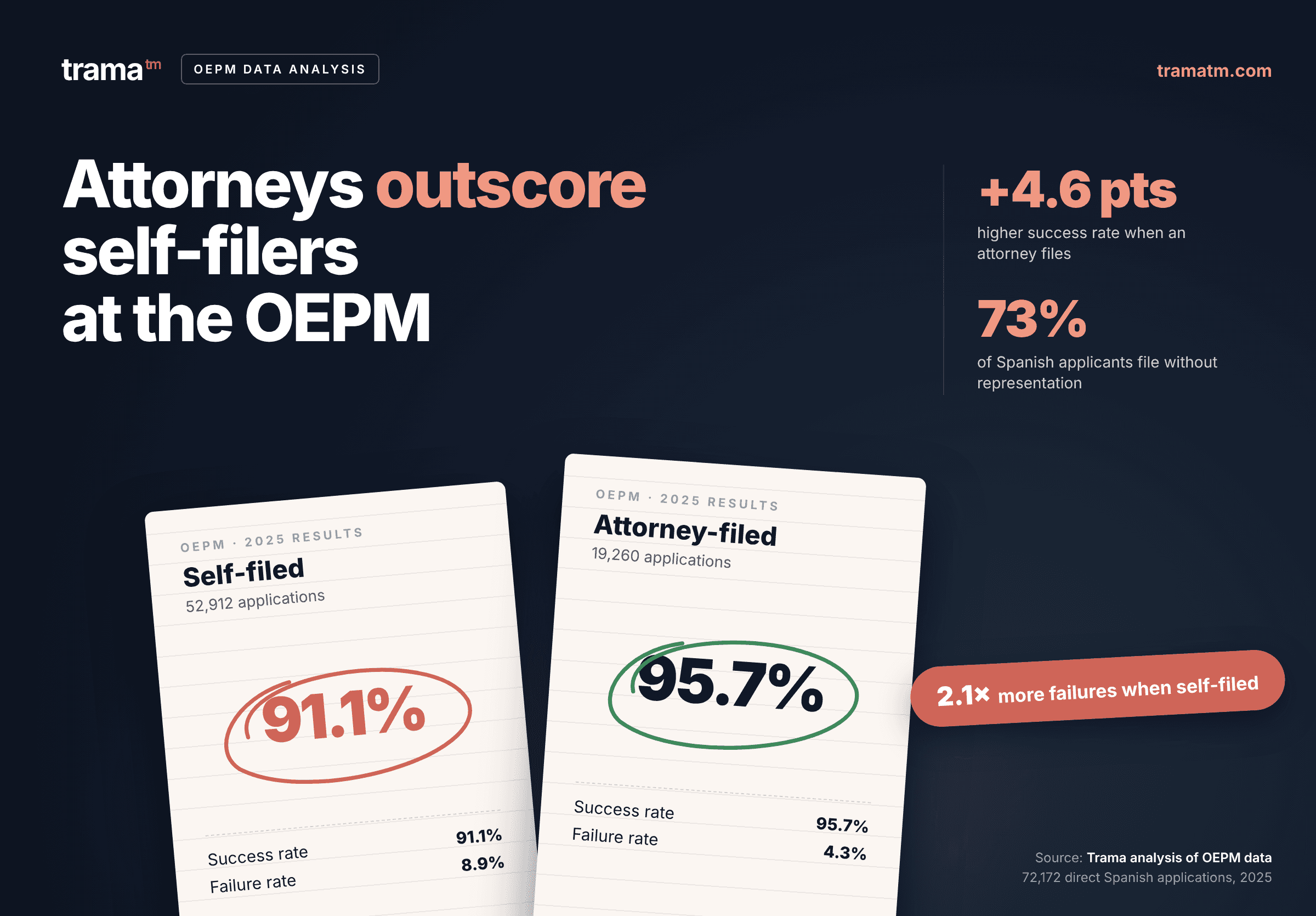
Spain stands out in our analysis: nearly three in four applicants file without a representative, far more than in any other jurisdiction we studied. Self-filers there recorded the highest self-filed success rate in the dataset, although their rate of unsuccessful applications was still around twice that of represented applicants.
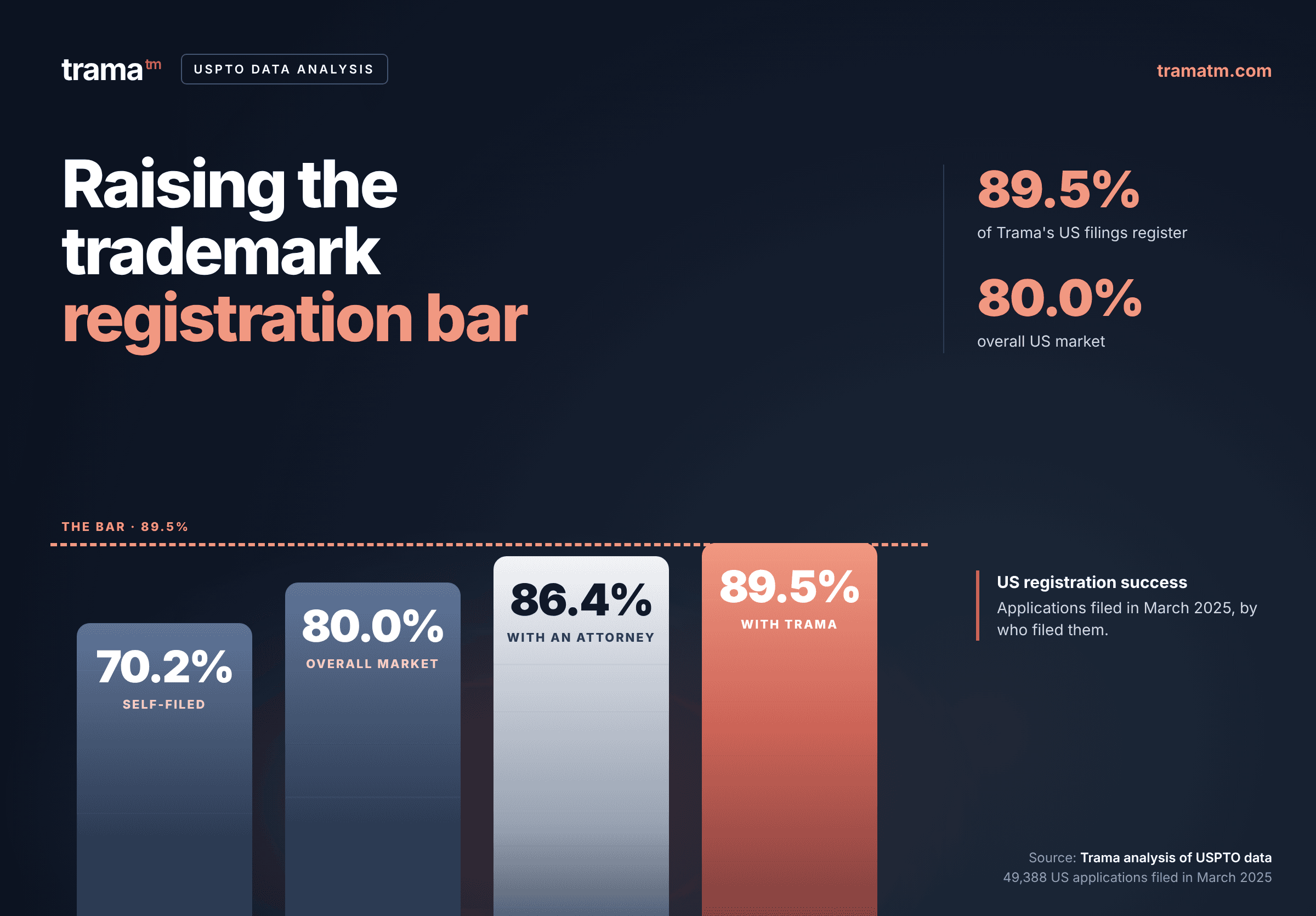
Registration success rates reflect every decision in trademark work, from clearance to drafting. Across the US, UK and EU, Trama's rates sit above the industry average.
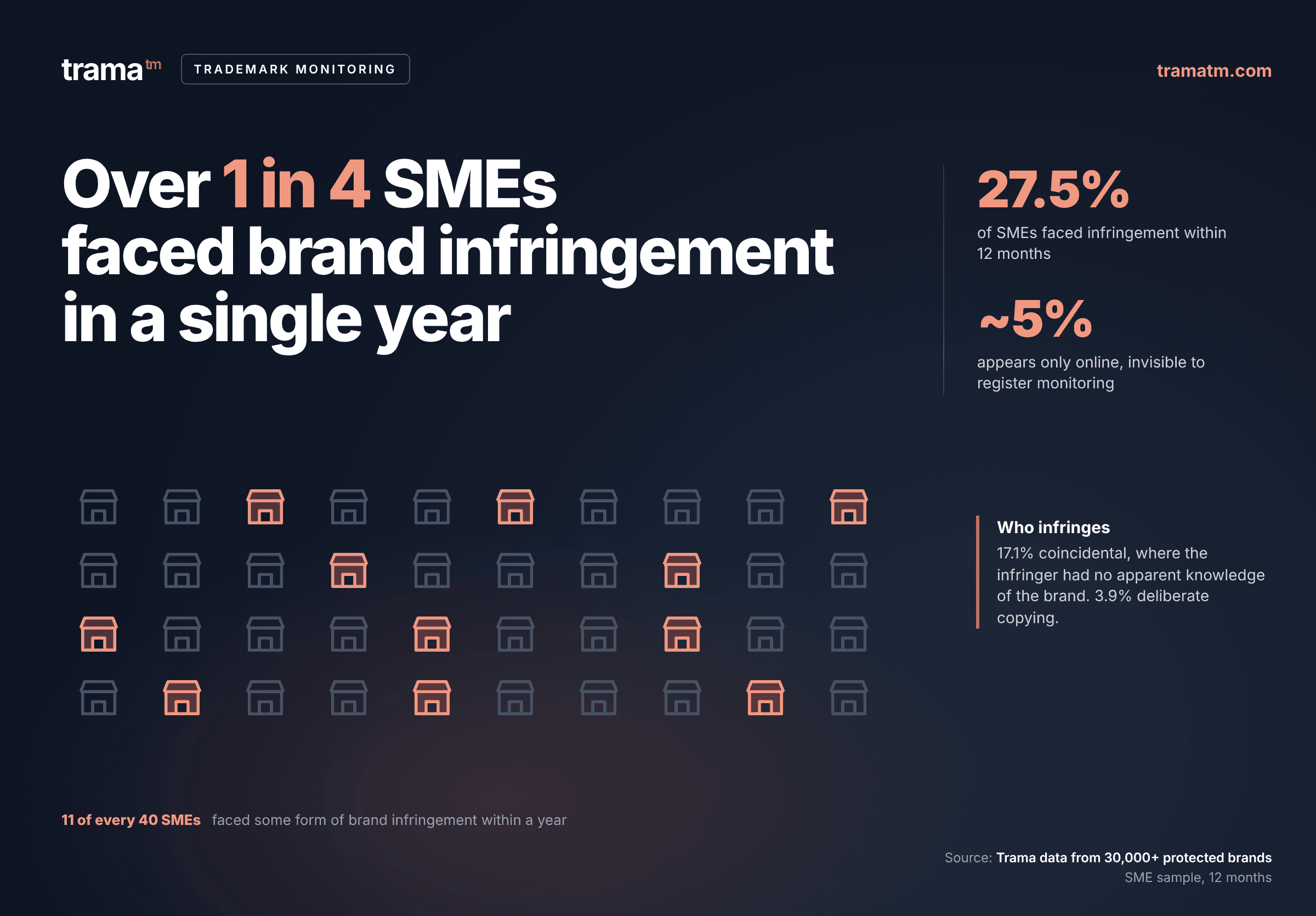
Register monitoring misses around 5% of SME infringement, which appears only on marketplaces, social platforms and app stores. A small share, but a costly one for those affected.
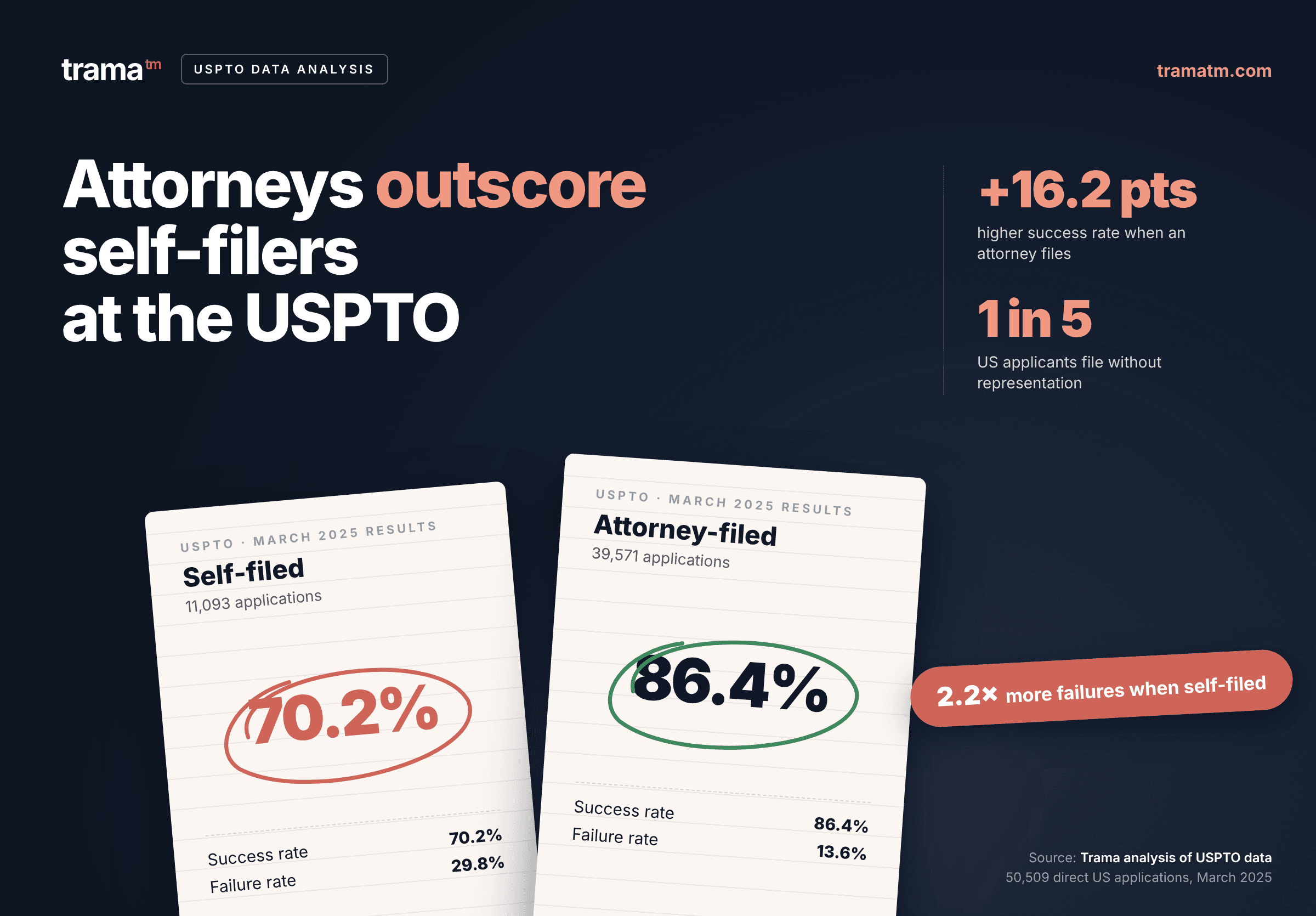
The United States is one of the more demanding jurisdictions for trademark registration, and it is also where our data shows one of the largest differences between self-filed and attorney-filed outcomes.
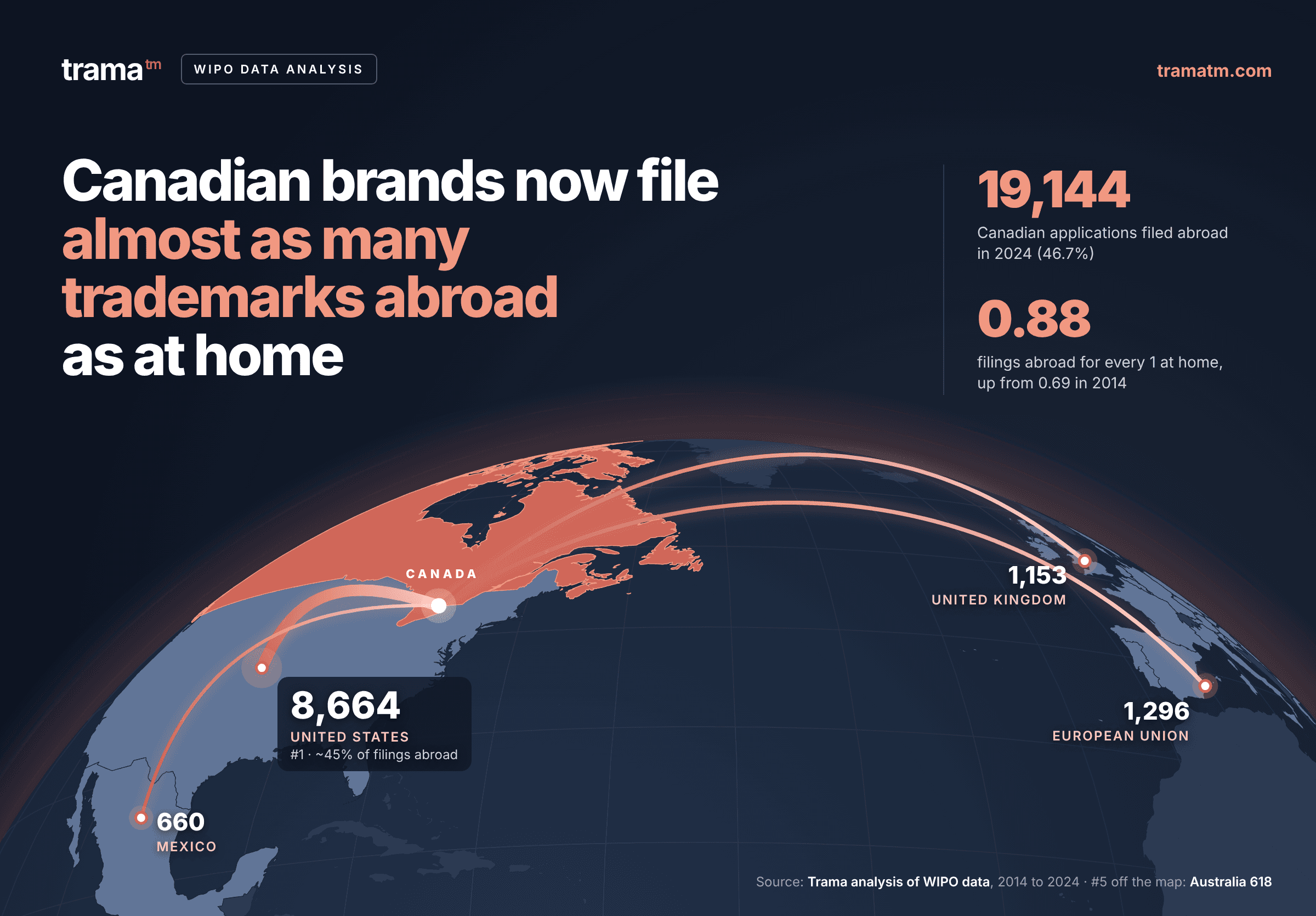
Some countries file almost everything at home. Others send the majority of their trademark activity abroad. This piece looks at where Canada sits on that spectrum, and what this means for your trademark practice.
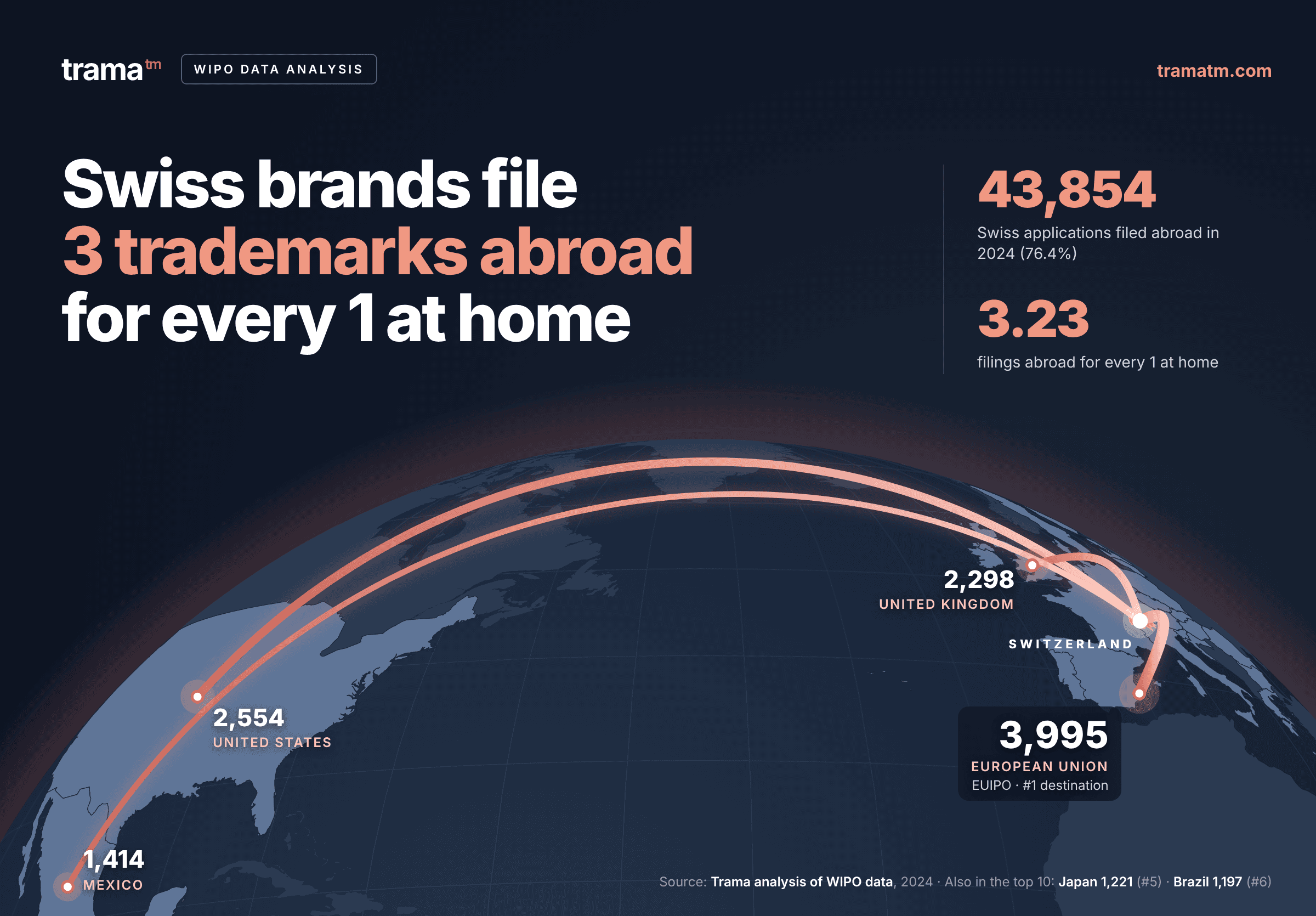
Switzerland is a small domestic market with an outsized international filing footprint. This piece looks at how Swiss applicants split their trademark filing between home and abroad, how that balance has moved over the past decade, and where their outbound filings actually go.
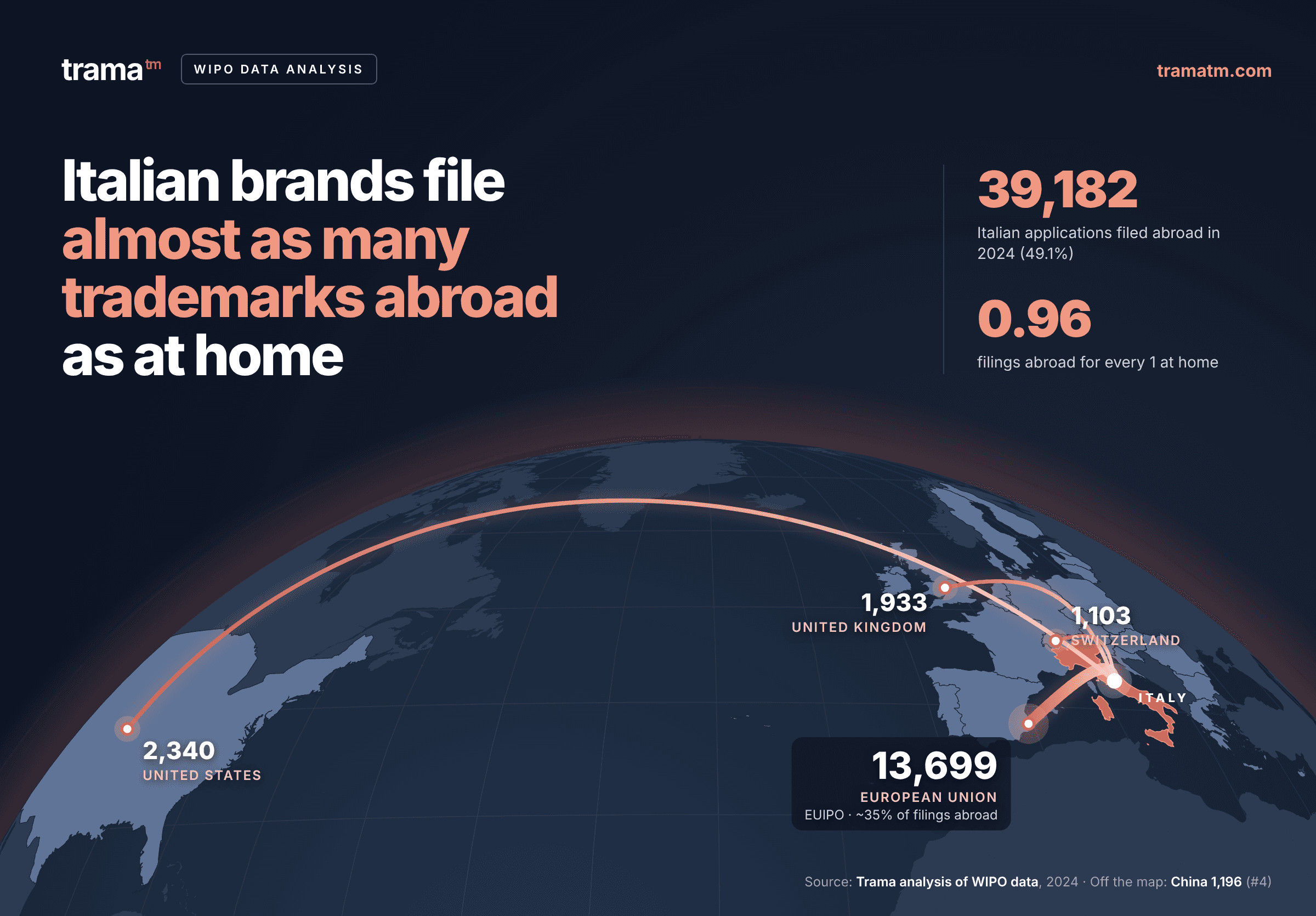
Italy has spent the past decade hovering right around an even split between domestic and international filing, tipping one way or the other from year to year without settling firmly on either side. That balance, and the slow drift toward domestic that's emerged from it, is the subject of this piece.
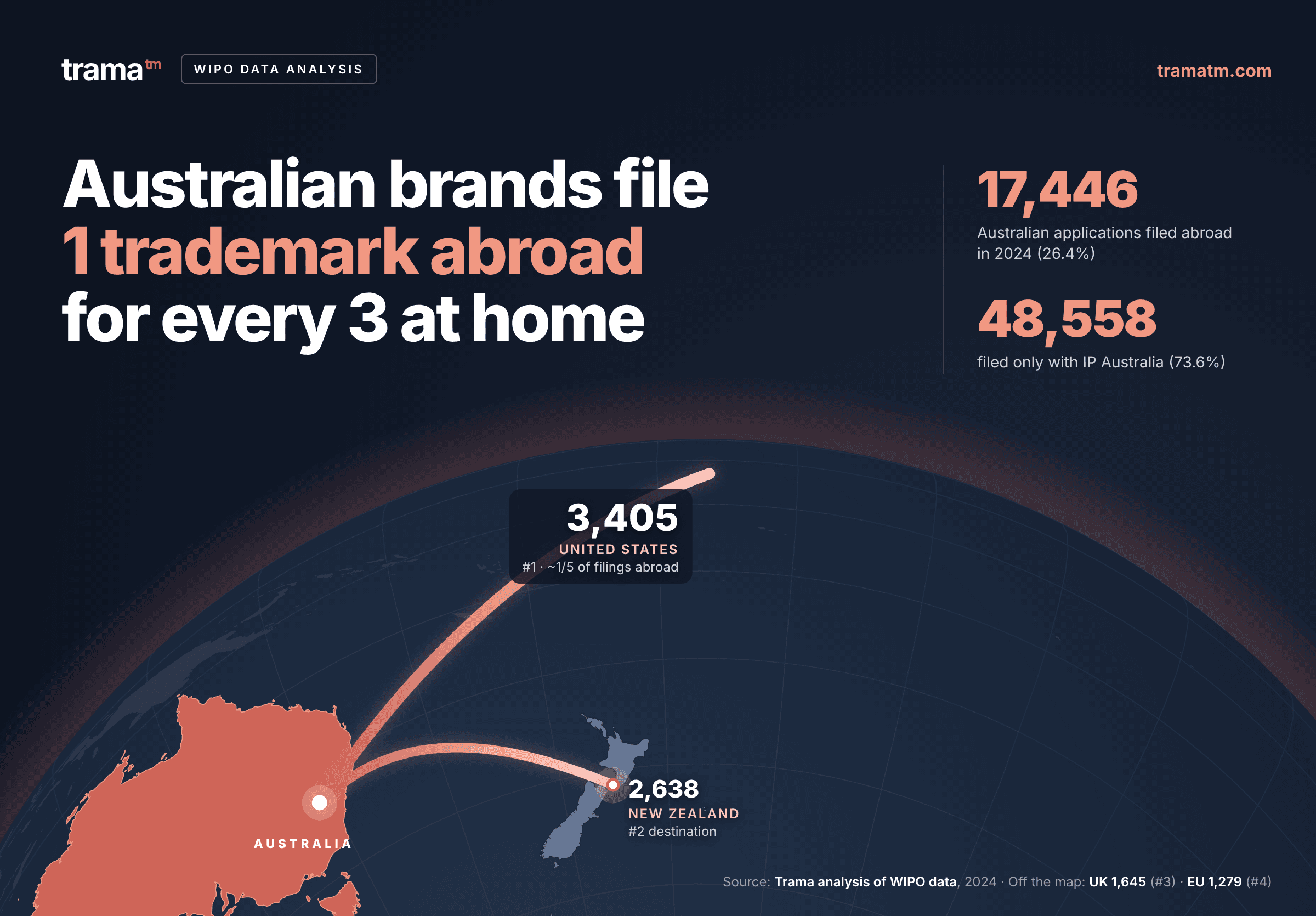
Geography shapes a lot of trademark strategy, and few markets make that clearer than Australia. Sitting apart from the world's largest filing hubs, Australian applicants have built a filing pattern that leans heavily on a handful of specific, geographically logical relationships rather than any single dominant destination.
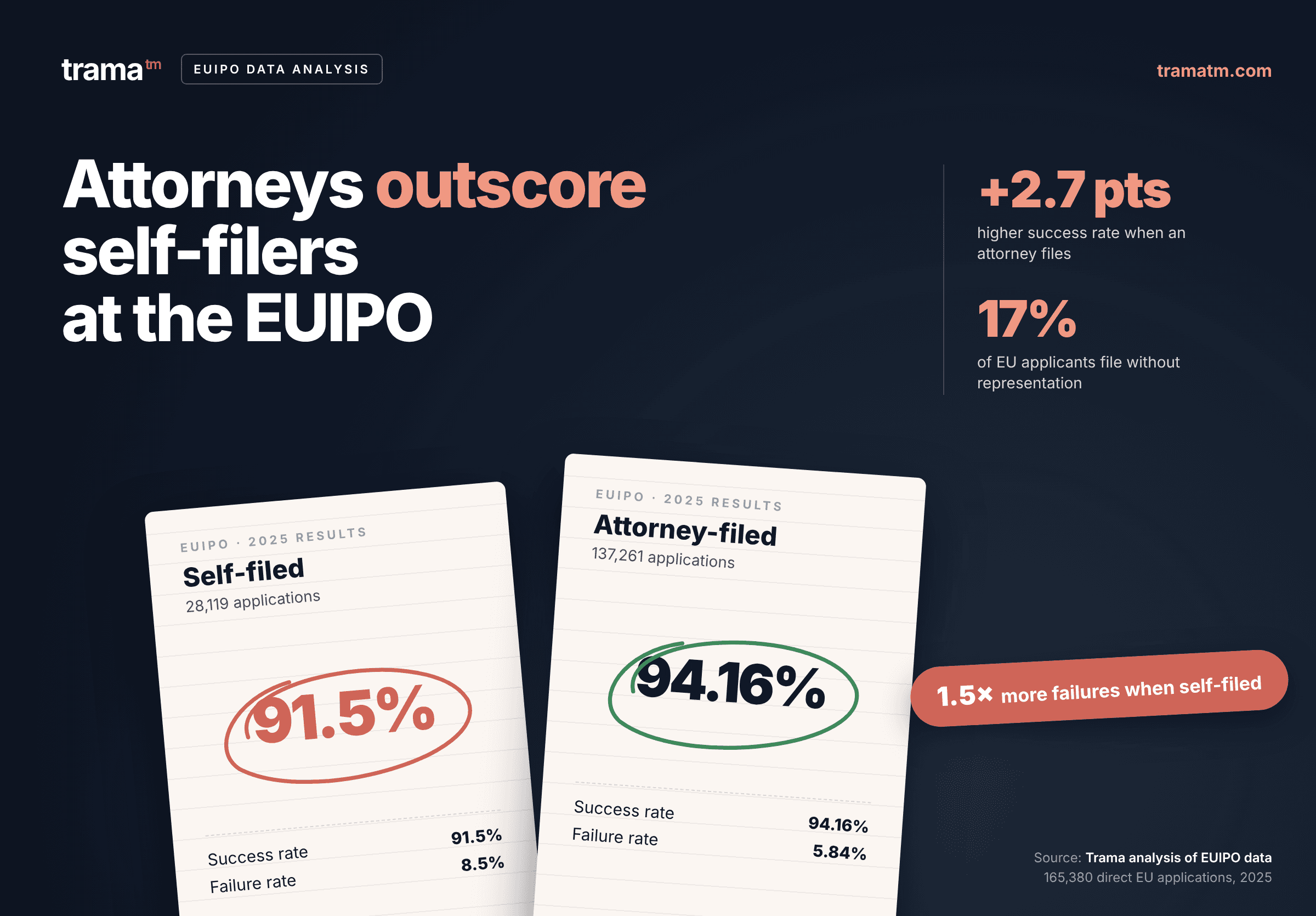
The EU has the highest share of professionally represented applications in our analysis, with 83% of applicants filing through a representative. Even in one of the most applicant-friendly major offices, attorney-filed applications were more likely to succeed.
...


